
The first Catholic families in Cobden did not arrive to find a church. They arrived to find farmland, a railroad, and each other. Mathias Clemens came from the Rhineland-Palatinate in 1853. Charles Howenstein from Baden, John Cerny from Bohemia, the Sweitzers, the Biglers from Appenzell, Leonhard Flamm, Benjamin Basler, the Kohlers, John Ihle, George Stadelbacher, Markus Vitt — German, Swiss, and Bohemian names that still answer from the pews and the cemetery stones.
As early as 1861, Mass was said in the home of Mathias Clemens. Priests came from Anna, Cairo, and Mound City. The village itself was still becoming Cobden. The parish was not yet a parish. It was a handful of families determined not to lose the faith they had carried across an ocean.
1879 — A parish on paper and in wood
On January 30, 1879, St. Joseph's Roman Catholic Church of Cobden was formally organized under the Diocese of Alton. The signatories were Bishop Peter Joseph Baltes, Vicar-General John Janssen (later the first Bishop of Belleville), Rev. John Herlitz, and the first lay trustees, Philip Mead and Mathias Clemens.
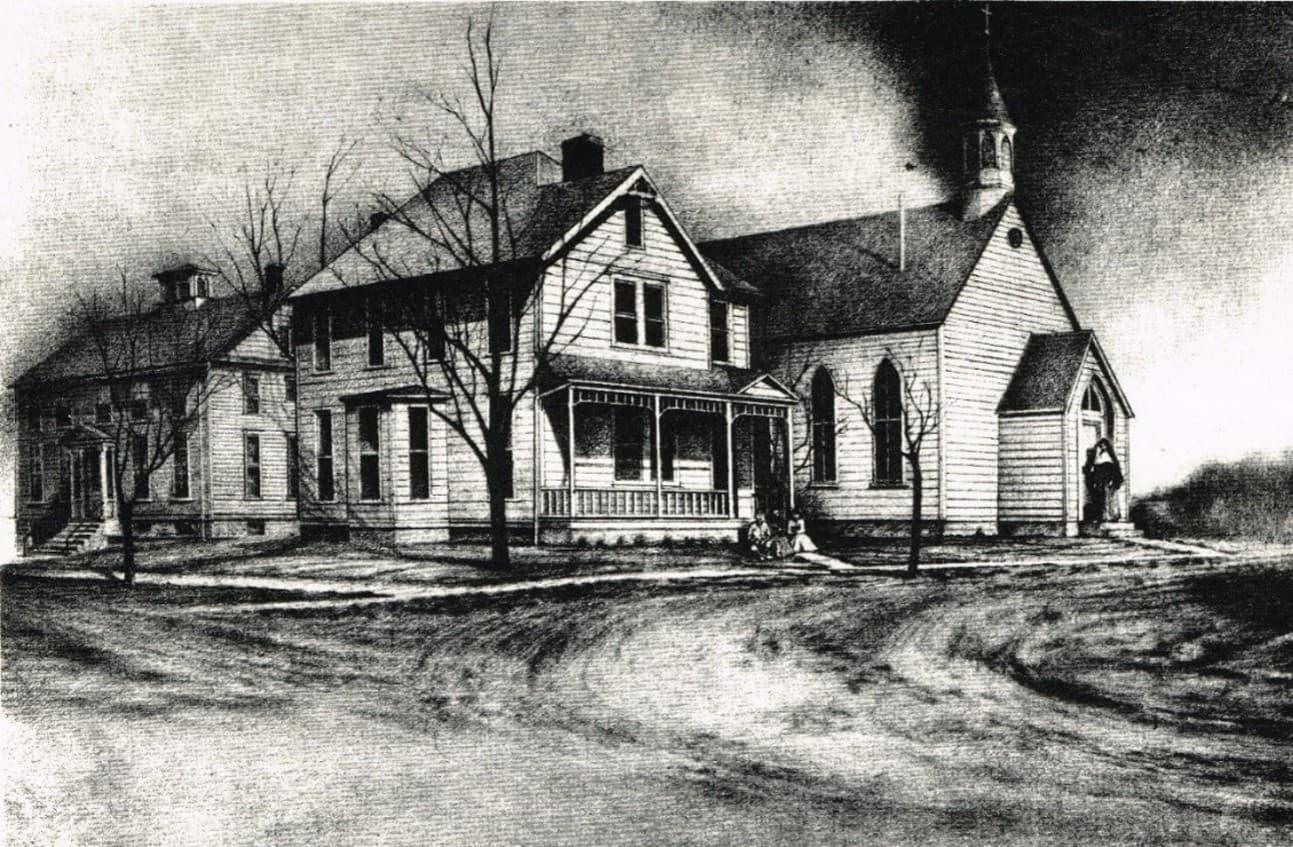
That same year a frame church, twenty-one by eighteen feet, was finished on Centennial Street. It could hold about one hundred seventy people. B. N. Rethey of Cobden built the altar.
The firsts followed quickly, all under Fr. Herlitz: Magdalena Blum baptized March 30, 1879; Gertrud Clemens buried February 23, 1880 — wife of Mathias, whose private burial ground would later become the parish cemetery; Edgar Buck and Lorraine Belle married March 6, 1881.
Benedictines, then a resident priest
In 1881 the Benedictine Fathers from St. Vincent's Abbey in Latrobe took charge of the missions at Anna and Cobden. From their hard-won priory at Wetaug — the Canonical Priory of Cluny — they served these immigrant congregations until malaria and the death of Prior Oswald Moosmüller ended that chapter around the turn of the century.
October 12, 1894 marked the real independence of the parish: Fr. Christopher Goelz, first resident diocesan priest. Young, well-educated, strict in catechism, fond of the young people, and not above settling a steeple full of birds with a shotgun and blaming the holes on woodpeckers. Under him the rectory was built by the men of the parish for $1,562, the cemetery was properly platted and fenced, and in 1905 the two-story school and Sisters' dwelling went up.
His 1895–96 Status Animarum still reads like a roll call of the parish that endures: Basler, Bigler, Bleyer, Cerny, Clemens, Fischer, Flamm, Howenstein, Ihle, Kohler, Lingle, Manzer, Metz, Reichert, Schumacher, Stadelbacher, Sweitzer, Vitt — and the Makanda families who came over the ridge to Mass.
The brick church and the long line of pastors
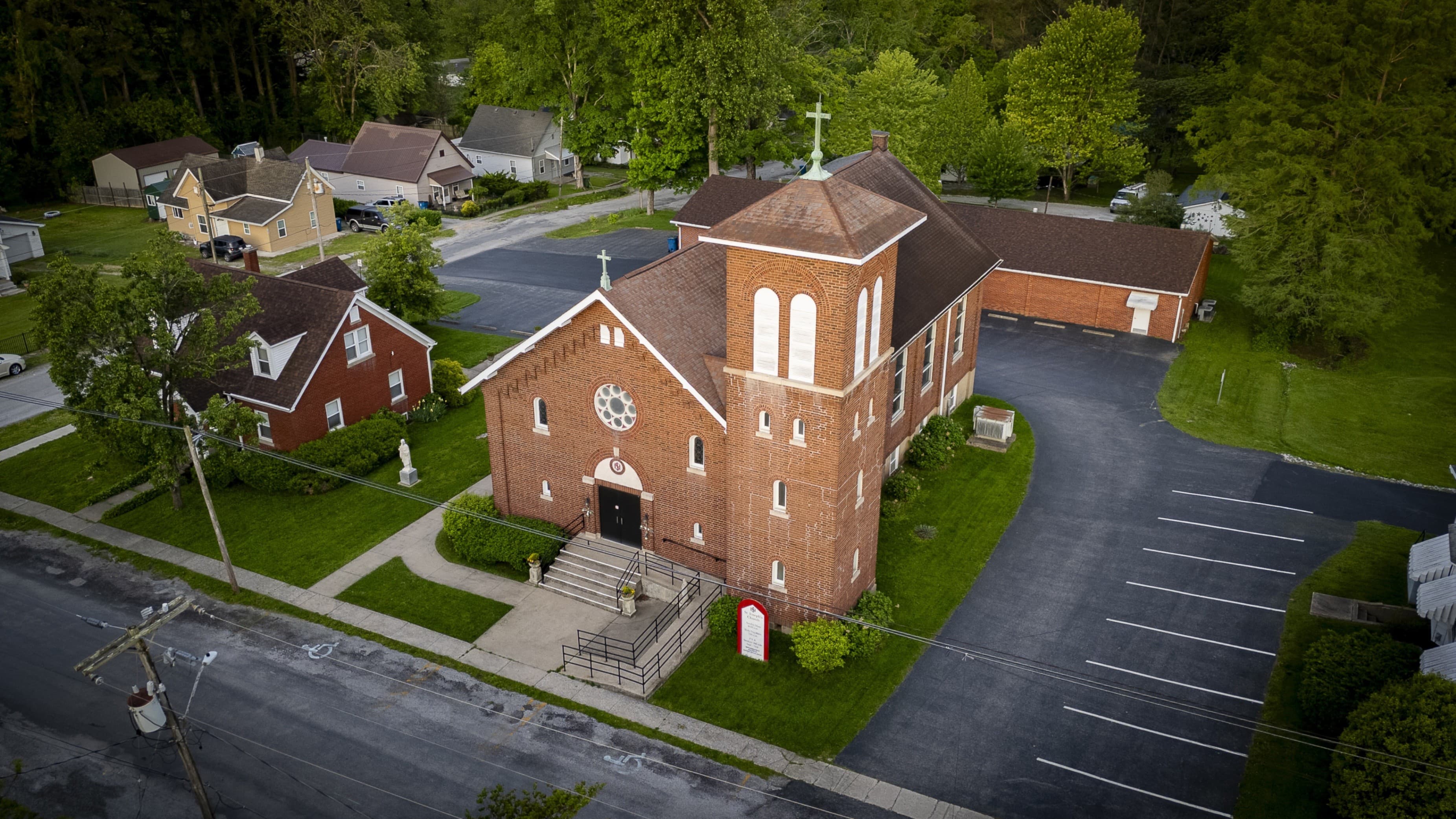
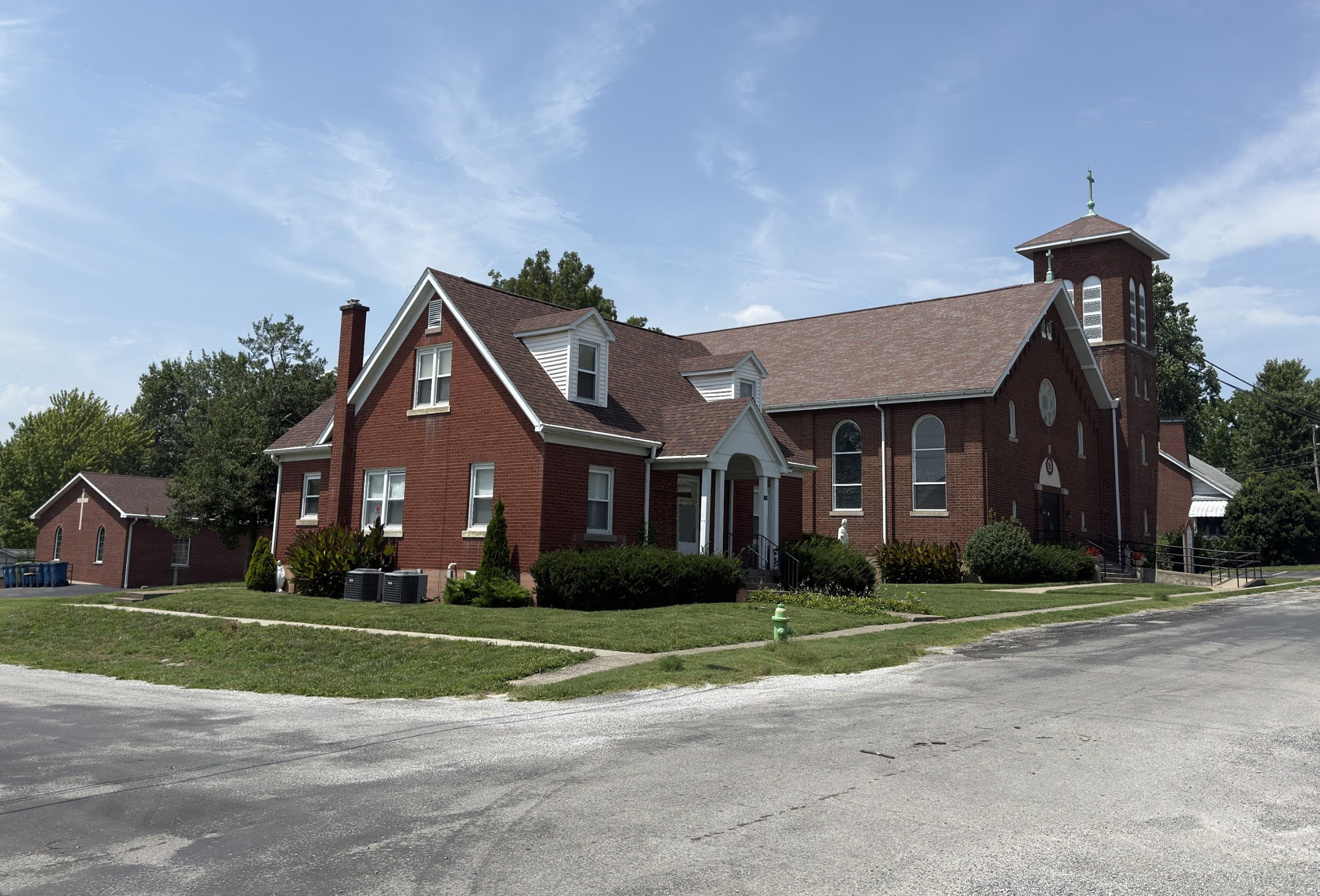
Under Fr. Charles Brumleve the frame church gave way to the brick church dedicated in 1926 — the building whose tower and windows still define the corner of Centennial. Through Fr. Fischer, Fr. Eppmann, Fr. Driscoll, Fr. Frankovich, Fr. Sulkowski, Fr. Orford, Fr. Drone, Fr. Keating, Fr. Humphrey, Fr. Baumann, Fr. Peter, Fr. Kownacki, Fr. Balestrieri, Fr. O'Connor, and the rest, the same families kept the place.
Seven women from this parish entered religious life. Their names — Stadelbacher, Flamm, and the others — are part of the same story as the windows given “in memory of,” “by the family of,” “by the children of.”
Fr. Federico, Fr. Uriel, and the parish that stayed
Fr. Federico Higuera came in 1988 and stayed, in every capacity, for thirty-five years — the longest priestly service in the history of St. Joseph. He insisted that the Parish Council carry real weight, prepared the people for seasons of fewer priests, and left behind a Guadalupe chapel, a Papal blessing for the 125th anniversary, paintings given away as gifts, and a cemetery plot of his own.
Fr. Uriel Salamanca arrived from Colombia in 2008 as a Fidei Donum priest who spoke no English and stayed until he was fluent, a citizen, and the man carrying two parishes and the Hispanic ministry of a wide stretch of southern Illinois. Deacon Pat Patterson, ordained in 1985, served until his death in 2024 and is buried here as well.
In the early 2000s the parish doubled the hall, bought the houses that completed the block, repaired the sanctuary, painted the sky-blue ceiling, and kept paying for the future in cash and in labor. The difficult diocesan years of consolidation closed other churches. St. Joseph is still here, getting ready for its sesquicentennial, with the same surnames on the roster that Fr. Goelz wrote down in 1896.
That is the short telling. The full history — the building accounts, the window families, the bells, the nuns, the cemetery deeds, the jokes about woodpeckers, and the long patience of a small parish — lives in the book prepared for this anniversary.